- Published on March 31, 2026
- Bishnu K.
Germany is becoming a top choice for international students seeking high-quality, affordable education and strong career opportunities. As Europe’s largest economy and home to leading global companies like Mercedes and Siemens, Germany offers a vibrant mix of innovation, culture, and easy access to travel across Europe. It’s no surprise that more students are choosing Germany to kick-start their study abroad journey.
Location
Located in Central Europe, Germany is one of Europe’s largest countries, at roughly 357,592 km2 in size. Sharing its borders with nine countries, and the Baltic and North Seas, Germany has a variety of landscapes, from mountain ranges to coastlines. Its position in Central Europe makes travel to other countries both easy and affordable. And its growing academic reputation means that it is a top destination for international students.
Regions
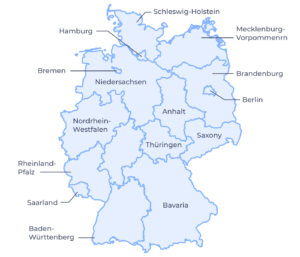
Germany has 16 states, with three of those being the city-states of Berlin, Bremen, and Hamburg. Bavaria, in southern Germany, is the largest state in Germany. With a population of over 82 million, but a land area of 348,672 km2, Germany is one of Europe’s most densely populated countries. Berlin is Germany’s capital city. Both Berlin and Munich are consistently ranked as two of the world’s best student cities.
Climate and Weather
Germany enjoys a temperate climate, frequent weather changes that can occur daily, and four distinct seasons. Higher elevations in the south commonly bring colder winters, so cold temperatures last longer in these regions. Elsewhere, winters can be milder, only several degrees below freezing. Spring and summer can be hot and dry, as can autumn.
People, Culture, and Languages
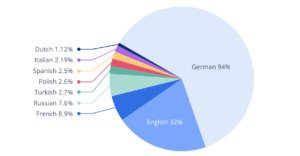
The official language of Germany is German, which is spoken by the majority of the population. Bordered by nine countries, it won’t be surprising to learn that Germany is a widely diverse country, where multiple languages are spoken. In fact, 67% of Germans speak at least one foreign language in addition to German.
Newcomers to Germany, particularly English speakers, will find that roughly 30% of the population in Germany can speak English at a high level. English is the most common foreign language in Germany, and is often taught in school. Other common, though less frequently spoken languages are French (8%), Russian (7%), and Turkish (3%).
Most Germans are direct communicators. This means that they’re honest and open, and sometimes blunt in conversation. Generally, people don’t hide how they feel, especially around ideas and opinions. This might take students coming from countries with more indirect communication styles time to get used to! (Not sure which style you use? Think about how people around you use the word “yes.” If it always means “yes,” your communication style is likely direct. If “yes” can also mean “no,” or “maybe,” you’re more likely to be an indirect communicator, where meaning is shared through context and style of conversation, as well as the words themselves. Indirect communication is more common in countries like Japan, China, Peru, and Saudi Arabia).
As a country as famous for its music and the arts as it is its industry, Germany’s contributions to classical music and the automotive industry, from Bach and Beethoven, to Mercedes and BMW, are well-noted.
There are a number of festivals throughout the German calendar for international students to attend and experience. Perhaps most notable is Oktoberfest, taking place in the fall, and lasting two weeks from late September to early October. The Berlin Film Festival, held in February, is one of the most prestigious film festivals in the world. Germany is also well-known for its Christmas markets, where students can experience festive foods, beverages, decorations, and Christmas lights displays.
Germany offers more than excellent education — it’s a place to advance your career, experience rich cultural traditions, and explore the heart of Europe. To help you succeed, be sure to check out our detailed guides on admissions, visa processes, scholarships, and living tips. Get ready to start your exciting new adventure in Germany!